Open science infrastructure for research information with Ricgraph
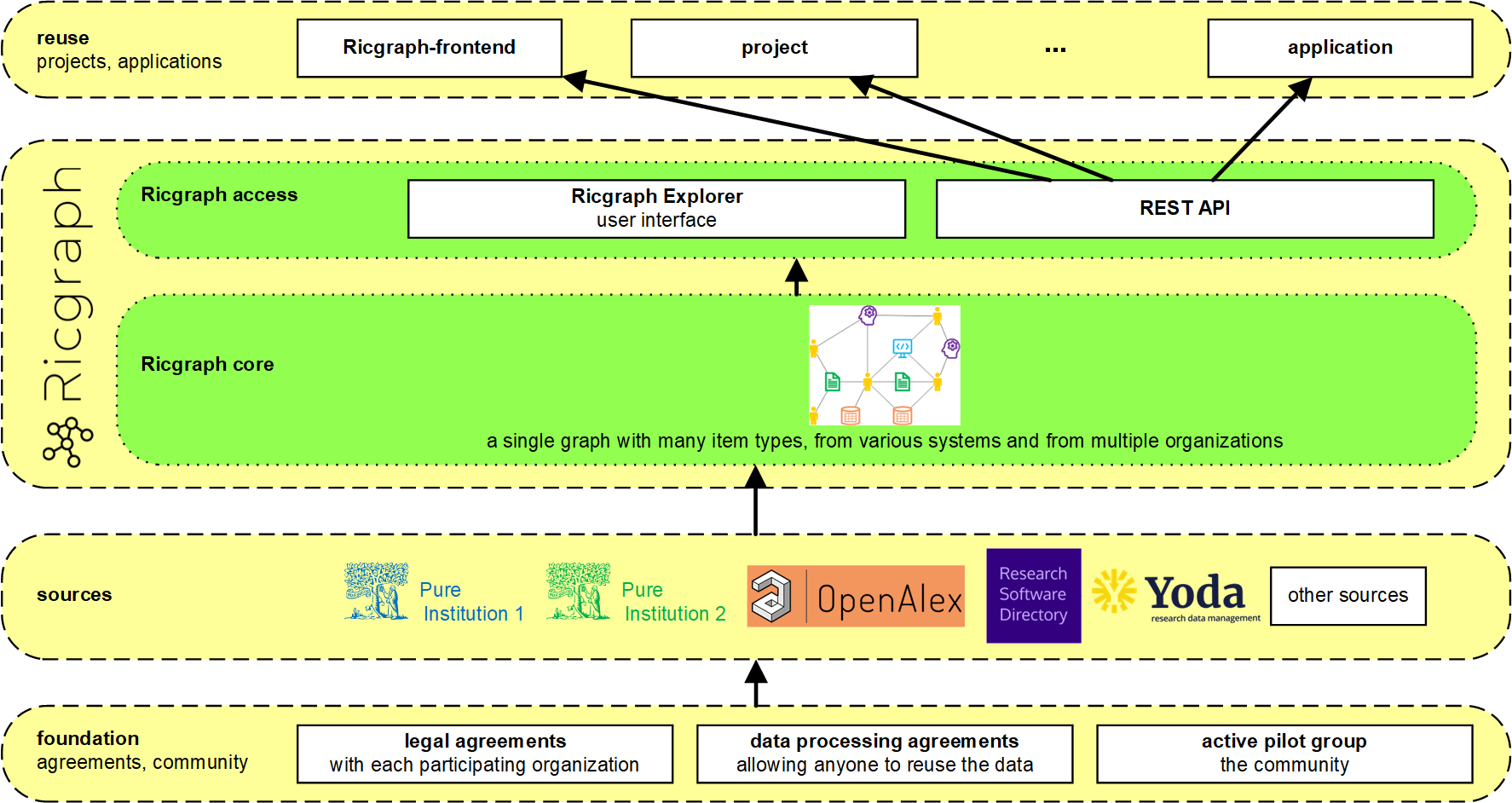
Ricgraph is an open source open science infrastructure for research information that can store many types of items into a single graph, accessible through a user interface (Ricgraph Explorer) and a REST API. This infrastructure is operational and used in our Pilot project Open Ricgraph demo server.
What is an open science infrastructure?
An IT infrastructure is a shared set of connected technologies that other tools and services can build on. It provides a common foundation, so different applications do not have to build the same basic systems separately.
An open science infrastructure is an IT infrastructure based on open science principles. These principles include sharing information, being clear about its sources, and supporting collaboration and fair access.
As an open science infrastructure for research information, Ricgraph makes research information easy to find, access, and reuse. Users can see where the information comes from and how it is collected. Sharing this information helps people work together.
An open science infrastructure is therefore more than just hardware and software. It also connects information and makes it available for use.
Challenges
Building an open science infrastructure for research information is not easy. To integrate research information from various systems and from multiple organizations is even more complicated. This is not only a technical challenge, but also an organizational, legal, and privacy challenge. An active community is required.
In our pilot project, we are working on these challenges. At the moment, we have succeeded in building the infrastructure and integrating research information from various sources and from multiple organizations (for more information read the Ricgraph pilot project page). With each participating organization, we have legal and data processing agreements in place, allowing anyone to reuse the research information in Ricgraph. The pilot group is our active community.
Examples of projects that may profit from Ricgraph as an open science infrastructure
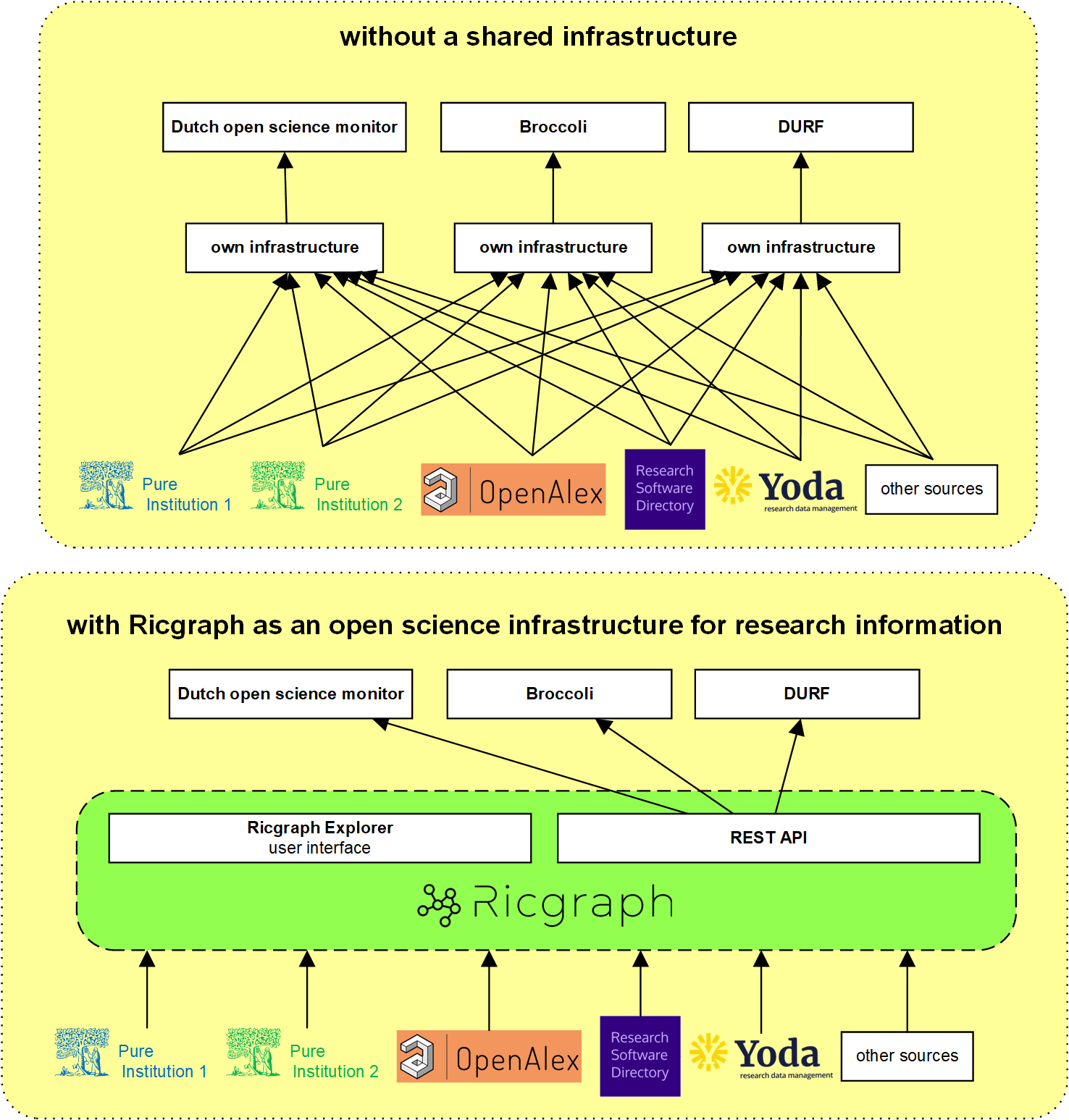
To illustrate why Ricgraph as an open science infrastructure for research information is useful, we consider as an example three projects that were awarded by Open Science NL in 2025. Open Science NL is the Dutch national program that aims to promote and accelerate the transition to open science in the Netherlands. It does so through dedicated funding, empowering communities, capacity building, and supporting infrastructure.
Awarded in the tender for an open science monitor in October 2025:
Dutch open science monitor, a project with CWTS, Dialogics, and others (2 years).
“This consortium will develop a robust, context-specific framework for monitoring and evaluation, as well as a prototype dashboard to visualize an open science monitor.”
Awarded in the Open Science NL call Open Science Infrastructures in December 2025:
Broccoli for open research information, a project with SURF and others (4 years).
“Broccoli will bring accessible, reliable and reusable information on Dutch research actors, activities, and outputs together in an open infrastructure that facilitates evidence-informed decision-making in the Dutch research system. The project will bring together research information experts, users and providers to collectively harvest, transform and curate the information needed for (a) monitoring publisher deals, (b) open science monitoring, and (c) responsible research evaluation.”
DURF, Strengthening the Netherlands research portal and institutional repositories, a project with SURF and others (4 years).
“DURF will reinforce the existing Netherlands Research Portal and existing institutional repositories/CRIS systems to make availability of Dutch research output more robust, increasing our resilience and sovereignty. Lots of article PDFs are missing from repositories.”
All of these projects will need to have a collection of research information to achieve their goals. As far as currently known (November 2026), these projects have not yet started developing their own infrastructure. Ricgraph can give these projects a flying start, because they can focus on the aim of what they intend to do, and not on creating the infrastructure to do it.
Try it out
Explore Ricgraph as an open science infrastructure for research information by installing the proof of concept frontend for Ricgraph from GitHub.
Once installed, you will have your own modern user interface for Ricgraph, connected to the research information available on the Open Ricgraph demo server. You can adapt the code to suit your needs, for example, by adding or removing buttons, changing page layouts, or developing new features that use the information in Ricgraph.
The frontend uses the Ricgraph REST API to access the Ricgraph demo server, as shown in the first figure on this page (the “Ricgraph-frontend” box in the “reuse” bar). This saves you the time and effort of creating your own research information backend. To get started by exploring research information, thanks to the infrastructure that Ricgraph provides, you do not need to:
- install Ricgraph;
- harvest information from source systems;
- arrange agreements with organizations to process their research information;
- build your own backend.
Instead, you can focus on creating an interface and features that meet your needs.